
The Sociology programme embedded a clearer Support to Study model, giving students flexible, personalised deadlines to support wellbeing alongside work pressures, improving student autonomy, mental health outcomes, and satisfaction, despite increased staff workload.
Our challenge
As Degree Programme Director for Sociology until September 2024, Dr Gethin Rees observed that a large proportion of students were working long part-time hours, often close to full-time employment, alongside their studies. At the same time, many students were presenting with significant mental health difficulties.
This created a tension between maintaining the quality assurance standards of the degree programme and being sufficiently flexible and supportive in response to students’ complex personal, financial, and mental health circumstances.
Our solution
The Sociology team focused on properly embedding Newcastle University’s existing Support to Study process, which had previously been misunderstood and inconsistently applied.
They introduced a clear, shared model for identifying and supporting students early through referrals, falling marks, or staff concerns. Students were invited to structured Support to Study meetings involving academic staff and wellbeing support:
Students were invited to structured Support to Study meetings at either:
-
Level 1 — an informal meeting with a personal tutor, or
-
Level 2 — a more formal meeting involving the Degree Programme Director, senior tutor, personal tutor, and wellbeing support staff.
The most impactful change was giving students greater flexibility and choice over assessment deadlines. Deadlines could be deferred to later assessment periods, and students worked with their personal tutor to create a personalised deadline plan, restoring autonomy and supporting wellbeing.
The impact (results)
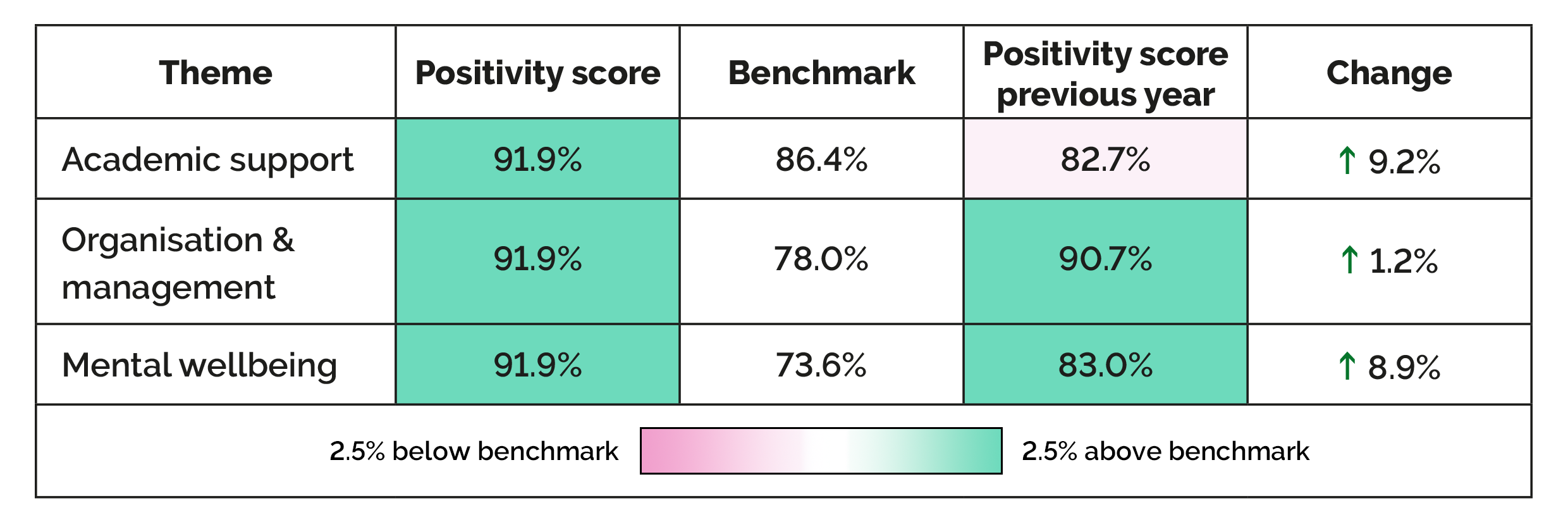
The key impact was that students felt a much greater sense of control over their education by being given responsibility and choice over their assessment deadlines. Personalised and flexible submission timelines meant students could better manage flare-ups in their health conditions without academic penalty.
Lessons learned
While the Support to Study approach was highly beneficial for students, it was also extremely resource-intensive. The level of personalised engagement required significant time and coordination from Degree Programme Directors, personal tutors, senior tutors, wellbeing services, teaching staff, and professional services.
Deferring assessments to non-standard periods created additional administrative and academic workload, requiring strong goodwill and collaboration across teams to manage exam boards, submissions, and grading processes effectively. The model is not yet sustainable at scale. Finding a way to deliver this level of support in a less labour-intensive way remains an ongoing challenge, but one that is essential as student mental health pressures continue to grow.
Tips for colleagues
- Start by identifying the main concerns your own students are bringing forward, as challenges vary widely between units.
- Improve the accessibility of assignment briefs, lecture slides, and online learning materials to support a wider range of learning needs.
- Use inclusive teaching and assessment design to reduce barriers to engagement before problems escalate.
- View accessibility and inclusive practice as a way to support student wellbeing while also managing staff workload more sustainably.
Skills and attributes
Students were able to develop the following attributes:
Education for Life Strategy
This case study reflects the following aims of the Education for Life strategy:
- Equity: To provide a core, universal offer for all students, including tailored provision where needed, to ensure equity of access, experience and in outcomes for all, regardless of background, identity, nationality, location or mode of study.
Authors
 |
Dr Gethin Rees Senior Lecturer in Sociology School of Geography, Politics and Sociology |