
Real-world enterprise challenges in Psychology

Dr Patrick RosenKranz discusses how the School of Psychology designed enterprise challenges with charities to help students apply psychological literacy to real community issues, develop employability skills, and see how their subject knowledge can make a difference beyond professional psychology careers.

Embedding overseas research mobility into the curriculum

Dr Carys Watts explains how embedding short overseas research projects into the curriculum gives bioscience students a structured, supported and equitable way to experience international research without committing to a full semester or year abroad.

CultuRACE: Embedding Cultural Competence Across the Curriculum

CultuRACE is a longitudinal, embedded pedagogical framework that uses playful, experiential, and reflective approaches to support culturally responsive practice, enabling students to engage safely and progressively with culture, power, bias, and professional responsibility.

Using a Peer-based Reflective Supervision Model to Support Learning

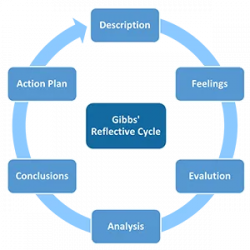
Jennifer Dodds-Vigouroux explains using a reflective learning framework supports students to develop self-awareness, critical thinking and problem-solving skills and provides a strategy for continuous learning and development. Implementing a peer-based reflective model enables students to learn more effectively.

Professional Dialogue for Fellowship applications provides an accessible and inclusive assessment option

Dr Rebecca Gill discusses how Professional Dialogue for Fellowship applications offers an alternative to a written application, enabling participants to demonstrate their evidence for Fellowship recognition in a mode that best suits their preferences and needs.

Adopting Inspera for the first time: my experience

A personal reflection from Dr Elise Pegg, Senior Lecturer in the School of Engineering, on her experience of introducing digital exams into a module in the MSc in Biomedical Engineering using Inspera, the University’s digital exam platform.

Building students’ confidence and capability in oral communication

How Tariq Shafi, Senior Pre-Clinical Lecturer at NuMed Malaysia, supports Stage 1 Medicine students to develop oral communication skills through a staged research communication task. The approach combines formative preparation, small-group presentation, peer questions and immediate feedback to help students build confidence and capability in a supportive environment Our challenge  Oral communication is an important part of students’ Read more about Building students’ confidence and capability in oral communication[…]

A psychologically informed approach to teaching leadership and harm

Pip Kyle explores a psychologically informed approach to supporting students to present and critically engage with research on leadership and harm. The case study relates to an international cohort of postgraduate students studying on an MSc in Management programme, Developing Leadership Perspectives module, committed to enhancing their leadership development and practice.