An interdisciplinary Live Projects module where small teams tackled real climate and sustainability challenges for external partners. The module blended workshops, fieldwork, consultancy and online reflection to turn theory into practice, and practice into impact.
Our challenge / opportunity
SCX8004 was created to give MSc Leadership in Climate Change & Sustainability students more than lectures: they needed authentic, team-based experience of designing climate action under real-world constraints. The module had to:
• integrate over 20 weeks of taught and self-directed activity alongside other learning and coursework;
• work for a cohort with mixed disciplinary backgrounds;
• connect students with industry, policy and community stakeholders; and
• build confidence in critical, creative and professional skills.
Our solution (approach)
• Front-loaded induction & online scaffold – a blended induction introduced live-project principles and set a short post-session task prompting students to map how their discipline links to climate challenges.
• Design studio-style weekly cycle – each week featured a combination of lectures (research or stakeholder-led) and workshops where teams developed and iterated project ideas.
• Integration with other course modules – weekly module classes were planned in conjunction with other module leaders to align with learning and facilitate practical application.
• Structured Canvas discussion boards – Monday prompts kept the conversation moving between workshops.
• Authentic milestones – Project ideation, refinement and a formal proposal to meet the client’s brief. Deliverables and client presentation at project completion.
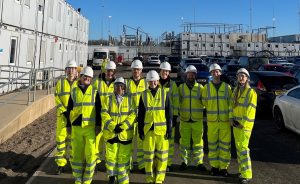
• Industry exposure – A fieldtrip visit to the client’s onshore converter station, stakeholder consultations, design-review presentations to RWE, plus support from ARUP and Sage Group mirrored professional practice.
• Student Initiated skill sessions – optional workshops on life-cycle assessment, environmental law, report writing and digital tools were scheduled in response to student requests captured in face-to-face and online discussions.
• Responsive to student feedback – quick Canvas announcements clarified requirements (e.g., reflective report limit increased from 500 to 1,000 words after cohort feedback) and signposted resources ahead of key events (e.g., a reminder to research RWE and prepare questions for external guest).
• Continuous online reflection – moderated boards encouraged weekly peer feedback and cross-disciplinary insight, with prompts to keep debate constructive.
The impact (results)
• Partner verdict – External reviewers noted: “Directly engaging with the students and receiving innovation and energy from them in return was a real pleasure…industry benefits hugely from these collaborations – not only through fresh thinking, but also by demonstrating that it is accessible, exciting, and full of opportunity for graduates.”
• Outputs delivered – Two group deliverables (reports, website) submitted to RWE; six reflective accounts were submitted internally.
• Programme aligned – Live Projects module interacted with and realised themes and topics from across the larger programme.
• Student verdict “The Live Project module was such an engaging learning experience… [it] gave me the opportunity to take ownership of my learning, apply my legal background and connect it with sustainability. It really showed me how both areas can come together to shape practical, real-world solutions.”
“I really enjoyed the team-based nature of the module, as it is something that gave the project a more dynamic and collaborative approach, allowing me to engage in teamwork in a new way… Without the Live Projects module, I don’t think I would have been as prepared for working after university”
Lessons learned
• Design flexibility is essential – “floating” slots enabled us to be responsive and add skill sessions when gaps emerged.
• Authenticity drives engagement – knowing external experts would review their work and provide feedback raised student commitment.
• Asynchronous dialogue matters – carefully scaffolded discussion prompts and announcements kept momentum between live sessions and surfaced support needs early.
Tips for colleagues
1. Pre-launch planning essential, including partner induction and expectation management.
2. Run a low-stakes simulation (e.g. sprint methodology in a single session) to model the collaborative culture you expect.
3. Secure partner dates first; then arrange teaching around those fixed “pressure points.”
4. Use discussion-board prompts to foster reflective, respectful dialogue.
5. Schedule one “contingency” workshop each term so you can respond to emerging skill needs.
6. Include “Return to this week’s overview” button so students never get lost in Canvas.
Skills and attributes
Students were able to develop the following attributes:
- Reflective and self-aware
- Self-management
- Self-directed learning
- Ethical awareness
- Flexibility and resilience
- Critical thinking
- Problem solving
- Creative thinking
- Digital skills
- Enterprising
- Communication
- Collaboration
- Leading and influencing
- Insight
- Future focused
Education for Life Strategy
This case study reflects the following aims of the Education for Life strategy:
- Encounters with the Leading Edge: To put at the heart of our curriculum and learning experiences, encounters with our world leading research and the leading edge of industry and practice.
- Fit for the future: To ensure our students are fit for their future, our teaching is fit for the future of our offer, and our colleagues are fit for the future of HE
Further resources
List any other resources you would like to signpost colleagues to.
Authors
 |
Dr Stephen Blenkinsop Senior Lecturer in Climate Change, School of Engineering (SAgE Faculty) | stephen.blenkinsop@ncl.ac.ukDr Alistair FordLecturer in Geospatial Modelling, School of Engineering (SAgE Faculty) | alistair.ford@ncl.ac.uk |