Through interdisciplinary problem-based learning, students explore sustainability challenges, develop a broad understanding of the SDGs, and develop collaborative experiences and essential skills for future careers.
Our challenge / opportunity
Following a curriculum review, the School of Natural and Environmental Sciences set out to redesign their stage 1 curriculum (involving 180 students+ across 8 degree programmes) to provide a greater emphasis on sustainability, multidisciplinary learning and the development of key employability skills from the outset. Bringing together students from degrees as varied as Animal Science, Agriculture, Environmental Science to Food Marketing and Land Management, two new modules were developed, one (Introduction to Sustainability) covering the theoretical and conceptual underpinnings of sustainable development, and a sister module, ‘Sustainability in Practice’ which was designed to help students apply the knowledge gained through real-world case studies and active learning.
Our solution (approach)
The design of the ‘Sustainability in Practice’ module focused on three core principles: problem-based learning (PBL), learning from multidisciplinary perspectives and team-based learning and reflective practice. Active learning approaches like PBL are well-suited to well to exploring sustainability issues and challenges, as they engage learners with real-world problems. PBL involves learners working in small, facilitated groups to solve problems. The problem acts as the catalyst for learning, enabling students to develop new knowledge and skills through the process. Through tasks and activities, students take on greater responsibility for their learning but with support and feedback from facilitators. A key feature of PBL is reflective learning – getting students to reflect on their experiences through the problem-solving process.
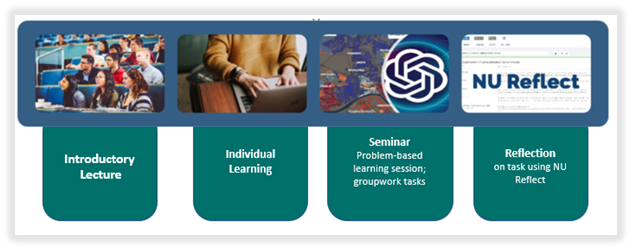
This module was delivered across both semesters with four core SDGs (Life on Land, Life Below Water, Zero Hunger and Responsible Consumption & Production) explored through either one, longer 4-week block or 2 shorter 2-week blocks. Each block begins with an introductory lecture, setting the context and theory for the PBL scenario or challenge (see fig 1). Students were then set some individual learning (reading, research) to complete before the following weeks’ 2-hour seminar, where students worked in their pre-allocated, mixed discipline groups to work through a series of tasks in response to a challenge or problem related to the SDG theme (see fig 2 below for examples). At the end of each seminar, we embedded 10 minutes for students to write a reflection in NUReflect on the skills or knowledge developed through the session using a skills template developed specifically for the module.
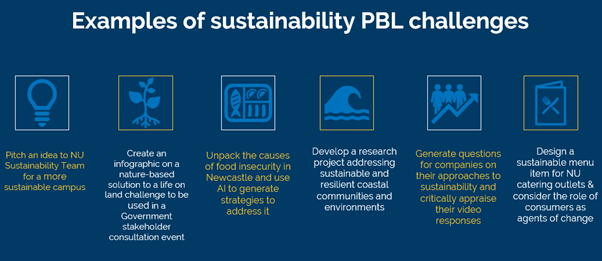
Fig 2: Examples of Problem-based learning scenarios
While this approach has been highly effective in fostering interdisciplinary collaboration and skills development, the module will be redesigned within the parameters of the Leading Edge Curriculum (LEC) Framework. This includes a semesterised and linear structure, ensuring alignment with institutional curriculum transformation goals. Importantly, the redesign will retain the core pedagogical strengths of the current model – including SDG-themed PBL, interdisciplinary group work, and embedded reflection – demonstrating that such transformation is not only possible but can enhance the student experience without compromising what works well.
The impact (results)
Embedding active learning through a PBL approach enabled students to develop a broad range of education for life skills and attributes. These included critical thinking and reasoning, problem-solving, data synthesis, research skills and the ability to work across disciplines. Students also strengthened, collaboration, communication, planning and time management – skills that form a strong foundation for continued development in Stages 2 and 3.
Crucially, students learn how to navigate groupwork and are taught strategies for overcoming some of the challenges this way of working presents. While PBL scenarios and challenges were central to the module, active learning extended beyond these, particularly within seminar sessions. Providing a safe, facilitated space for students to engage in discussion and debate. It was noted by seminar facilitators that over the course of the year, students developed greater confidence in contributing to the sessions as they built trust and rapport with team members.
Lessons learned
PBL Design and Delivery: The PBL approach is time and resource intensive. Due to the large size of the cohort (180+ students) the same seminar had to be repeated four times each week. Each two-hour seminar is split into a series of tasks to encourage active learning. For each seminar, the module leader and academic leads for each PBL worked together to develop a set of slides to guide each seminar and detailed facilitator notes with timings and prompts to support the PGR demonstrators who led the sessions. Module delivery relied on a team of PGRs who teach (3 PGRs per seminar session) whose research expertise mapped broadly onto the seminar topics. The PGRs were trained in a paid session and were paid 2 additional hours preparation time per week to enable familiarisation with lecture slides, seminar slides and guidance notes. In this module, the PGR team not only provided in-seminar continuous feedback to students as they worked through activities, but they also helped to support group dynamics. The PGR team also provided invaluable feedback to the module leader on how to adapt and refine activities and timings based on student responses.
Groupwork challenges: As active learning in this module focused on groupwork, we recognised at the design stage that this can often come with challenges (negative student feedback, free-loading, absence) so we embedded a number of strategies and mechanisms to help with this. Groups were pre-allocated to include a balance of different degree programmes, gender and home/international students. In the pilot year of the module, groups comprised of 4-6 students (as recommended in the PBL pedagogic literature) however we increased the group numbers to 6-8 in the second year to ensure a good critical mass of attendance as the smaller groups were impacted by absence due to illness and very early/late timetabling slots. We built ice-breaker activities into early seminars and the groups had to draft a group contract to develop a code of conduct for communication, effort and contribution and behaviour within the group. We developed additional resources on Canvas around effective groupwork. Finally, we recorded attendance in each seminar and used Buddycheck, the peer evaluation tool as part of an assessed group assignment to monitor contribution and effort.
Tips for colleagues
Embedding sustainable development (ESD) within the curriculum and anchoring learning in the UN Sustainable Development Goals (SDGs) has wide applicability to a range of degree programmes. ESD has the potential to not only give learners the opportunity to develop the knowledge, skills, values and agency to address interconnected global challenges, but to develop some of the softer skills that will benefit our student’s way beyond their degree programme. A key learning from this module is the importance of communicating to students the relevance of the chosen sustainability topics to their specific degree programmes. This was supported with videos, animations and SDG theme introductions on Canvas. Bringing in guest speakers from industry also highlights the real-world application of what the students were working on.
Skills and attributes
Students were able to develop the following attributes:
- Reflective and self-aware
- Self-directed learning
- Critical thinking
- Problem solving
- Creative thinking
- Digital skills
- Communication
- Collaboration
- Leading and influencing
- Insight
- Future focused
Education for Life Strategy
This case study reflects the following aims of the Education for Life strategy:
- Encounters with the Leading Edge: To put at the heart of our curriculum and learning experiences, encounters with our world leading research and the leading edge of industry and practice.
- Fit for the future: To ensure our students are fit for their future, our teaching is fit for the future of our offer, and our colleagues are fit for the future of HE
Further resources
- Student guides to PBL, groupwork, developing a group contract (including template) and reflection were developed as part of this module and are available to view on the Canvas pages for this module (NES1100). Please email module leader for access amy.proctor@newcastle.ac.uk
Authors
 |
Dr Amy Proctor (SFHEA), Senior Lecturer, Centre for Rural Economy, School of Natural and Environmental Sciences, SAgE, amy.proctor@newcastle.ac.uk Staff Profile | School of Natural and Environmental Sciences | Newcastle University
Michelle Black (SFHEA), Curriculum Transformation Manager, Student Services michelle.black@newcastle.ac.uk |