
Dr David Grundy, Senior Lecturer in Digital Education, (NUBS)
Faculty of Humanities and Social Science
What did you do?
I introduced and applied the Lecturer Oversight and Verification of AI (LOV AI) Co-Creation Approach to develop business teaching cases for a Finance and Investment MBA module delivered in a one-week, block-mode format (21 contact hours plus six hours of guided online work). Between March and April 2025, I combined OpenAI’s ChatGPT o3 Deep Research model with structured expert supervision to produce extended case studies, concise summaries, and a suite of derivative teaching materials.
Who is involved?
The module involved in this project was a Finance and Investment option module aimed at a general MBA audience taught in a case-led style. The module was delivered in a block-mode delivery pattern, with the students being taught 21 hours of primary contact time in a single week. The module had a further six hours of online supported guided learning materials which the students’ needed to work through including case videos, case-related interactive games and practice questions.
How did you do it?
First, I employed ChatGPT o3 mini-high with Internet Search to surface candidate case topics that aligned precisely with our syllabus objectives, iteratively refining prompts—and even excluding unsuitable companies—to land on rich, well-documented business scenarios (Step 1). Next, I crafted a highly detailed “deep research” prompt (≈800 words) instructing ChatGPT o3 to exhaustively generate narrative background, quantitative data, stakeholder analyses, and student discussion questions, leveraging its 200,000-token context window to produce over 20,000 words of raw case content and answer guides (Step 2).
Then, in the Ownership Phase (Step 3), I thoroughly reviewed every output, cross-checking sources (e.g., Financial Times, Reuters), correcting interpretation errors, deleting tangential sections, and ensuring alignment with pedagogical standards. This critical verification—covering roughly 10,000 words of case text and 10,000 words of answers—was the most time-consuming but indispensable for academic rigor.
Once verified, I distilled the extended draft into an 800–1,000-word student-ready case summary (Step 4). Building on this artefact, I then generated a range of supplementary resources—interactive storytelling games via Gemini 2.5 Pro, an AI-driven chatbot supplemented by a narrated vodcast (ElevenLabs), PowerPoint decks, and Panopto recordings—to support diverse learning activities (Step 5).
To create decision-focused vignettes, I further prompted ChatGPT to reshape the extensive case into a 3–4-page plot-driven narrative following classical case-writing principles (McNair, May, Andrews) (Step 6).
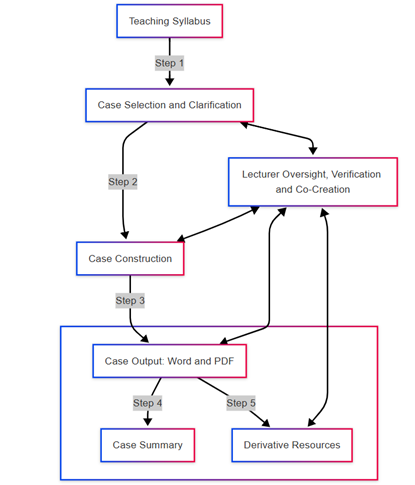
Figure 1: The LOV AI Co-Creation Approach
Overall, this co-creative process cut case development time from weeks to about four hours, while maintaining the depth, accuracy, and complexity expected at the MBA level.
Why did you do it?
I did this because writing deep, nuanced MBA teaching cases is traditionally so time-consuming—and often prohibitively expensive—that many instructors simply buy ready-made cases rather than author their own. I wanted to explore whether the latest generative AI (OpenAI’s ChatGPT o3 Deep Research) could serve as a genuine co-creator—accelerating case development from weeks to hours—while keeping pedagogical rigour intact. By embedding a structured Lecturer Oversight and Verification (LOV AI) approach, I ensured all AI outputs were fact-checked, refined, and aligned with learning objectives.
My goal was to democratise case creation—enabling any instructor to generate current, customised, and complex cases without sacrificing quality or integrity—and to offer a practical framework that balances AI’s speed with human expertise. Ultimately, I did it to show how thoughtful human–AI collaboration can revolutionize business education, reduce costs, and prepare both faculty and students for an AI-infused future—while still acknowledging the critical role of expert oversight and ongoing research.
Does it work?
I find that the LOV AI Co-Creation Approach works remarkably well. By combining the ChatGPT o3 Deep Research model with structured subject-expert verification, I was able to generate full teaching cases and student answer sets—in excess of 20,000 words—in just a few hours, compared to weeks when done manually.
The Deep Research model’s access to current, reputable sources (e.g., Financial Times, Reuters) meant factual accuracy was extremely high, and I encountered very few errors to correct. Moreover, once I crafted a detailed, 800-word prompt, the output quality was so strong that further iterative prompting was minimal—often it was more efficient to trim content than to ask for revisions. I also transformed extended case outputs into concise, 3–4 page vignettes and created derivative interactive resources, demonstrating the approach’s versatility.
That said, the ownership phase—where I cross-check sources, refine narratives, and adjust pedagogical elements—remains essential. In my experience, LOV AI accelerates case creation without compromising academic rigour, provided that expert oversight stays central.
The following links give examples of the materials created:
CoreWeave’s IPO Strategy and Equity Financing – An Extended Case Study
- http://www.staff.ncl.ac.uk/davidgrundy/files/2025/04/Teaching-Case-Coreweave-IPO-and-Equity-Case-and-Questions.pdf
- http://www.staff.ncl.ac.uk/davidgrundy/files/2025/04/Teaching-Case-Coreweave-IPO-and-Equity-Case-Discussion-Answers-for-Students.pdf
CoreWeave’s IPO Strategy and Equity Financing – Case Vignette Example
CoreWeave’s IPO Strategy and Equity Financing – An Extended Case Study – Interactive Game
Student Voice
Student feedback from the 11 MBA students on the module was excellent, they praise the up-to-date nature of the cases we were examining on the module and especially loved the more interactive derivative materials. The module scored 4.5 out of 5 on student feedback.
In addition the students displayed an extremely high level of engagement with the module, with module outcomes (as examined by a two hour closed book exam) increasing significantly from previous years.
Further information
To learn more, read David’s paper The LOV AI Co-Creation Approach: Creating Business Teaching Cases with Deep Research AI.