By embedding short overseas research projects into the curriculum, we give bioscience students a structured, supported and equitable way to experience international research without committing to a full semester or year abroad.
Our challenge / opportunity
Our Biomedical and Biomolecular degree programme students were interested in combining research experience with overseas mobility, but the opportunities available to them were often limited to activities outside the curriculum, such as summer vacation research scholarships. These could depend on funding availability, and students also had to fit the experience around their studies.
We wanted to make international research mobility more structured, more scalable and less uncertain for students. A full semester or year overseas does not suit everyone, and some students can feel nervous about studying in a second language. A shorter research mobility window offered a way to make the experience more accessible while still giving students meaningful exposure to research in another country.
From a School perspective, the challenge was also practical. Overseas research projects need careful planning, usually around a year in advance. We needed formalised partnerships, clear processes for student welfare, insurance, health and safety, ethics, project planning, funding and assessment. The opportunity built on existing global partnerships and research links and adapted them into a curriculum-based capstone research project experience.
Our solution (approach)
We embedded overseas research projects into the curriculum so that students know, well in advance, what the opportunity involves and how it fits with their degree. Students are introduced to the possibilities from year one through information sessions and via our Canvas Careers Hub, where we share information about opportunities and locations, and provide a repository of top tips and information. This helps students start thinking early about where they might want to go and what kind of research they might be interested in.
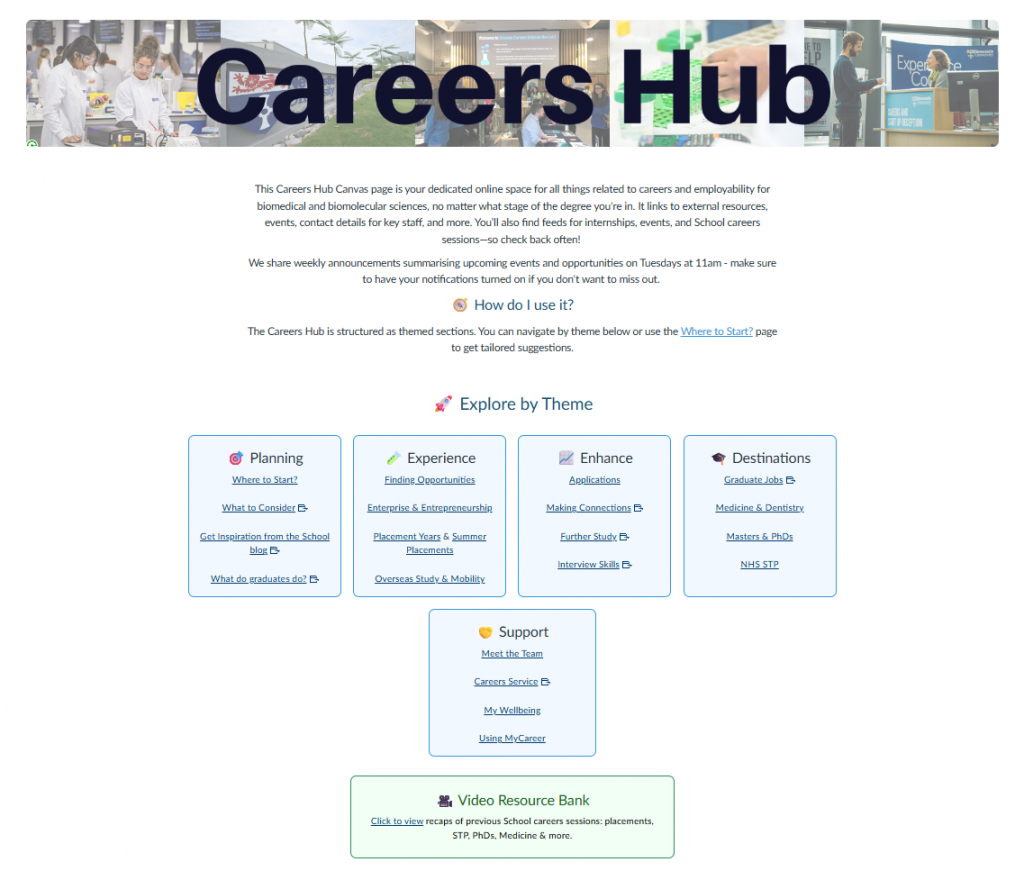
Schools may have their own versions to host key materials and Coordinators will have processes for disseminating information.
As students become interested in particular locations, we encourage them to do proactive research into the partner institution and the research taking place there. We then discuss whether a project would be the right fit for them. Students apply through the Global Opportunities process, using the Terra Dotta portal, which helps manage reciprocal quotas with our partner institutions.
The model depends on strong working relationships with partner institutions. As School Exchange Coordinator and module leader, I work closely with exchange coordinators in host locations to understand their processes, check what research projects they can offer, and confirm how students will be managed while they are there. These relationships are essential because we are not simply “dropping” students into another country; the experience needs to be organised and structured. For example, we ensure students are in contact with the host supervisor and have some pre-reading to do before they go, so they are prepared and know what to expect.
The capstone research project module involves eight weeks of research followed by two weeks of write-up. The timing can vary slightly depending on the host institution’s academic calendar, but we align the overseas project as closely as possible with the UK project window.
Academically, the overseas project mirrors the Newcastle experience and is managed under a separate but equivalent project module code for clarity. Students undertake lab-based or non-lab research, (including data analysis), and are assessed by their host supervisor for competence and professionalism. Their host supervisor can support them with the report, but the report itself is marked back at Newcastle to ensure consistency with the rest of the cohort. After the Easter break, students also complete an oral presentation back in Newcastle with their peers.
A key part of the model is preparation and support. The central Global Opportunities team (based in the Career Service Student Experience Team) supports students with drop-ins, Global Ambassadors, applications, paperwork, including learning agreements, pre-departure guidance and wellbeing check-ins while they are away. Students are also encouraged to prepare culturally and practically. For example, we recommend that they develop some basic host country language skills in their second year through the University-Wide Language Programme, via the Language Resource Centre, or tandem partner opportunities (see Further Resources).
We also draw on the experience of students who have already been overseas. We run a buddy system, connecting students who have been away with new applicants so that they can talk honestly and help each other prepare. Returning students also share what they wish they had known, from practical packing advice to insights about the host location.
The impact (results)
The student response has been extremely positive. Students value the chance to undertake real research in a different country without having to commit to a full year or semester overseas. Because the project is embedded in the curriculum, students know when they will go, what the structure will be, who they need to contact, and how the assessment will work. This reduces uncertainty and helps them feel secure before they travel.
The experience can be transformational. Some students return with much stronger language skills; for example, students who went to Paris with just A-level French came back almost fluent. Others gain a level of personal confidence and independence that is immediately visible.
One widening participation student had never had a passport before taking part. When I visited them during the placement, I barely recognised them as they had grown so much in confidence and maturity. They went on to complete a PhD and postdoctoral work. For me, that captures the value of the experience: it can change how students see themselves and what they believe is possible.
The funding model also helps support equity of access (currently Turing but moving back to Erasmus). Widening participation students are prioritised for funding, meaning additional support can make the experience more affordable. Students still need careful advice because some costs may need to be paid upfront, but the Global Opportunities team provides guidance so they understand the process and can plan ahead.
The impact continues beyond graduation. Students often have a powerful experience to talk about when applying for jobs or further study. We see them moving into excellent careers because they can evidence research skills, independence, intercultural awareness, adaptability and confidence. Some students choose to return overseas for study or work after graduating; others develop a more global outlook on their future, having a global network of new friends and greater understanding of cultural differences. As I often say about this experience, “it changes people.”
Lessons learned
The first lesson is that preparation matters. Students need to know the structure early, understand the application process, and have time to research locations and potential research areas. Building the opportunity into the curriculum means they are not left trying to organise something uncertain around the edges of their degree.
The second lesson is that partnerships need to be formal, reliable and well understood. Research links can be a starting point, but student mobility requires proper processes for welfare, insurance, assessment and support. Existing partnerships are often the best place to begin because the relationships and agreements are already there.
It is also important to recognise that overseas mobility does not suit every student. One student found the experience challenging because they had assumed they would be placed in the same location with a friend who also applied but who was allocated a different location. If we had known this, we may have been able to support that request. That reinforced the importance of encouraging students to be open about their expectations, worries and practical needs.
The buddy system has been particularly valuable. Students who have already taken part can offer advice that feels real and relatable. Their insights help new applicants prepare more confidently and reduce anxiety about living and studying in another country.
Sustainability is another consideration. European partners are easier to work with for shorter mobility projects, and offer the possibility of lower-carbon travel compared with destinations further away. That does not remove the need for international mobility, but it does encourage us to think carefully about where the greatest educational value can be achieved, and whether physical mobility is the only option.
Tips for colleagues
Start by finding out who your School Exchange Coordinator is. Every School has one, and they will know which partnerships already exist and where there may be capacity (see Further Resources below).
Use the Global Opportunities website to understand current partner institutions, their research and processes, then talk to the colleagues who already manage those relationships.
Begin with existing partnerships where possible. It is much easier to adapt and strengthen a trusted partnership than to build a new mobility route from scratch. If you know of an institution that is keen to do research and could offer projects, then let your School Exchange Coordinator know and they can investigate whether there is scope to increase partnerships.
Check early whether the host institution can offer suitable research projects and whether the timing works with your own curriculum and assessment schedule; some locations will have similar project modules which students can be added to for management of the experience, others manage the research window more flexibly.
Make the research experience as close as possible to the home research equivalent, especially in relation to learning outcomes and assessment. This protects students if plans change and ensures parity across the cohort.
Prepare students early. Encourage them to research their host institution, understand the practicalities, and develop basic language skills where relevant.
Build in peer support. Students who have already been overseas are often the best people to help the next group understand what to expect.
Skills and attributes
Students were able to develop the following attributes:
- Reflective and self-aware
- Self-management
- Self-directed learning
- Flexibility and resilience
- Critical thinking
- Problem solving
- Digital skills
- Communication
- Collaboration
- Insight
- Future focused
Education for Life Strategy
This case study reflects the following aims of the Education for Life strategy:
- Equity: To provide a core, universal offer for all students, including tailored provision where needed, to ensure equity of access, experience and in outcomes for all, regardless of background, identity, nationality, location or mode of study.
- Encounters with the Leading Edge: To put at the heart of our curriculum and learning experiences, encounters with our world leading research and the leading edge of industry and practice.
- Fit for the future: To ensure our students are fit for their future, our teaching is fit for the future of our offer, and our colleagues are fit for the future of HE
Further resources
- Global Opportunities website
- Global Opportunities Team – contact details
- Find your School Exchange Coordinators
- Language Resource Centre
- Tandem partner language opportunities
Authors
 |
Carys Watts Senior Lecturer School of Biomedical, Nutritional and Sports Sciences carys.watts@newcastle.ac.uk |