Katie Wray

Using portfolios to capture competency and engagement beyond module assessment

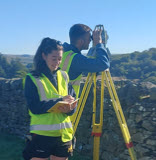
Discover how Katie Wray, Senior Lecturer in Engineering, collaborated with colleagues from LTDS and FMS TEL to pioneer an innovative reflective portfolio approach that was used with first-year undergraduate engineering students.

Photo of Jo Clark

Using Applied Pedagogy to Deliver Social Value, on a Management Consultancy module

Jo Clark (NUBS) describes working with MBA students to deliver a consultancy project, using the social value model, adding authenticity and contemporary relevance to academic theory, testing students’ skills as business consultants, and delivering value to a client organisation.

Picture of Professor Nick Megoran, smiling in blue shirt.

Surprise! Using creative, “playful learning” and humour to take older ideas seriously

Find out how Professor Nick Megoran from the School of Geography, Politics and Sociology designed an unconventional lectures in geopolitical theory that uses creative, playful learning and surprise to engage students.

Photo of John Hedley

Viewing a module’s exam questions to enhance student engagement

John Hedley, Senior Lecturer in the School of Engineering, explains how his module’s NUMBAS exam assesses students’ effort during the module, by giving them the opportunity to see, practise and ask for advice on all exam questions prior to taking the exam, and in the process developing a deep understanding of the module’s learning outcomes.

Photo of John Hedley

Creating consistent and automatic feedback for large student cohorts in Engineering

Dr John Hedley, Senior Lecturer in the School of Engineering, designed a marking criteria for a team of markers on a large population engineering module, enabling fast and consistent marking, alongside effective descriptive student feedback that is automatically generated.

Dr Alessio Iannetti

“Who wants to be millionaire” as a game to enhance students’ engagement and teamwork skills in life sciences curricula

Does the competitive nature of a game help to improve student knowledge retention, while making a seminar session more fun and engaging? Dr Alessio Iannetti investigated this and shares the results in this case study.

Photograph of Jerome Ruddick

Pottery for Promoting Honest Wellbeing Discussions

PGR colleagues Jerome Ruddick and Elly Polignano designed a wellbeing workshop to tackle mental health issues within academia for PGRs both within Newcastle’s History, Classics and Archaeology department, and beyond, in other northern universities.

In this case study Jerome discusses how a hands-on, creative pottery making activity became a highly successful part of the workshop, creating a calming environment providing mental and physical respite, allowing PGR students to disassociate from their own thoughts, engage with their peers, and practice self-evaluation by engaging with wellbeing questions on a deep level.

Dr David Grundy

Looking Beyond the Data – Using Student Learning Analytics as a Conversation Starter

Dr David Grundy, Director of Digital Education Newcastle University Business School Faculty of Humanities and Social Sciences  What did you do? I was part of the Learning Analytics Pilot who were using the Jisc platform, Data Explorer, to have data-informed conversations with my students about their progress and support. I usually have four meetings a Read more about Looking Beyond the Data – Using Student Learning Analytics as a Conversation Starter[…]

A photograph of Chris Graham

Using Vevox as a back-channel for student Q&As

Dr Chris Graham, Director of Digital Learning in Maths, Stats and Physics, explains how he uses the Q&A functionality in Vevox as a channel for student questions during lectures, how he has refined his approach to responding to questions during the lecture, and how students have reacted positively to the option to ask questions anonymously.

A photograph of John Holton

Developing diverse skill-sets, student engagement, and self-evaluation in a poster assessment

Dr John Holton, Senior Lecturer in Ancient History, describes designing a poster assignment for his stage 2 module that builds and tests diverse skill-sets, promotes student engagement by enabling students to self-select and then personally research their choice of topic, resulting in students showing an increased assessment confidence and unusually high engagement with the task.